
Tutorial 14: IBDP Bayesian Inversion with SVGD#
Note
This tutorial is available as a Python script examples/14_ibdp_inversion_svgd.py and an interactive Jupyter notebook examples/notebooks/14_ibdp_inversion_svgd.ipynb.
Perform Bayesian seismic inversion using Stein Variational Gradient Descent (SVGD) in a latent space defined by a convolutional autoencoder, demonstrated on the Illinois Basin – Decatur Project (IBDP) CO₂ storage site.
What You Will Learn#
Load seismic data, prior models, and mineral properties for IBDP
Use a pretrained convolutional autoencoder to define a latent space
Build a posterior from
InverseProblemand a log-priorRun SVGD sampling in latent space for Bayesian inference
Decode posterior samples and visualize porosity and clay volume uncertainty
Key Concepts#
Latent-space SVGD performs Bayesian inference in the low-dimensional space of a pretrained autoencoder. This reduces the dimensionality of the inverse problem while preserving geological realism encoded by the network.
SVGD maintains a set of particles that are iteratively transported toward the posterior distribution, balancing exploitation (log-posterior gradient) and exploration (repulsive kernel force).
The IBDP dataset provides a real-world test case where porosity and clay volume must be estimated from post-stack seismic data. The pretrained autoencoder compresses the 2D model space into a compact latent representation. SVGD then explores the posterior in this latent space, producing an ensemble of geologically plausible realizations that honor both the seismic observations and the prior geological knowledge.
Code#
from geobrain.core import InverseProblem
from geobrain.bayes import SVGD

problem = InverseProblem(forward_fn=forward, observed=d_obs, noise_std=sigma)
posterior = problem.as_posterior(log_prior=prior.log_prob)

svgd = SVGD(target=posterior, lr=0.005)
result = svgd.run(n_samples=50, n_steps=1000)

# Decode latent samples to model space
models = decoder(result.samples)
Results#
The SVGD ensemble provides multiple posterior realizations of porosity and clay volume, each representing a plausible subsurface model consistent with the observed seismic data and prior information.
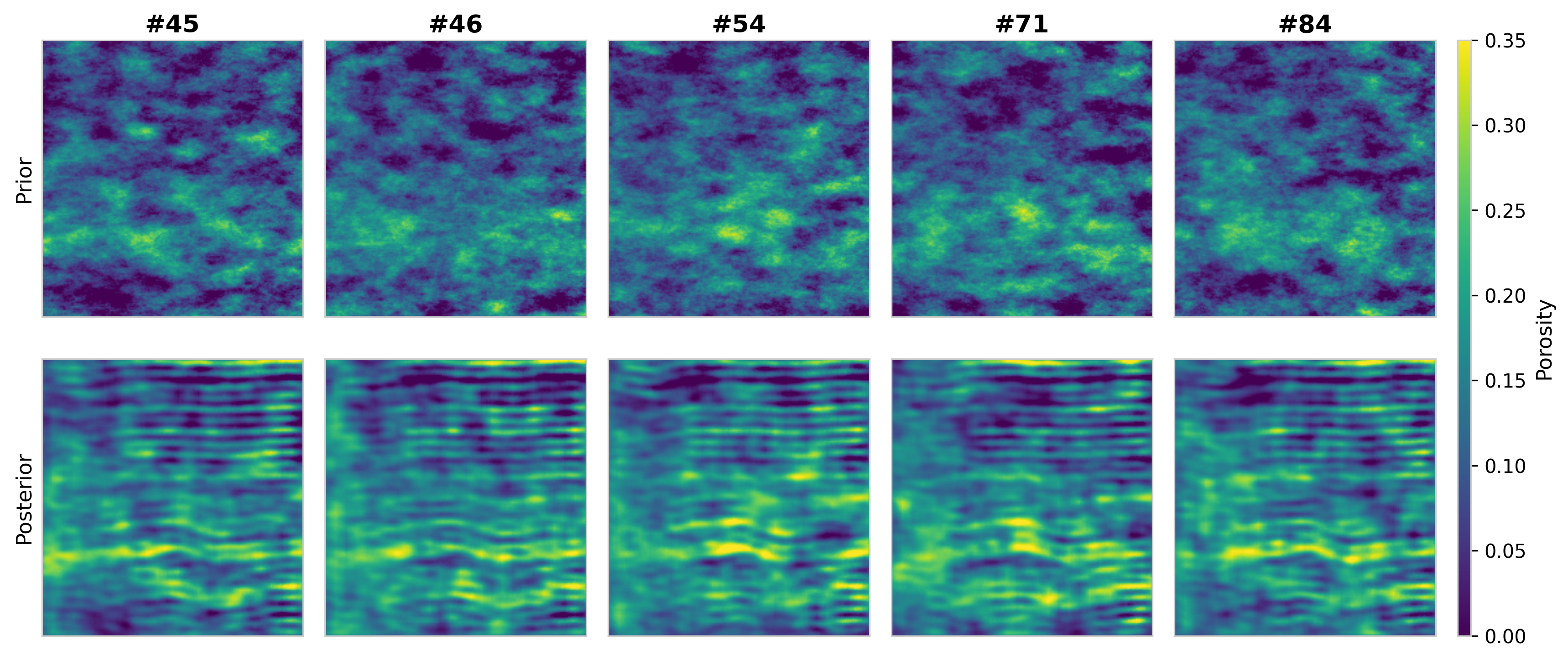
Fig. 73 SVGD posterior realizations of porosity and clay volume.#
Summary statistics – posterior mean and standard deviation – quantify the most likely model and its uncertainty. Regions with higher standard deviation indicate areas where the data provide less constraint.
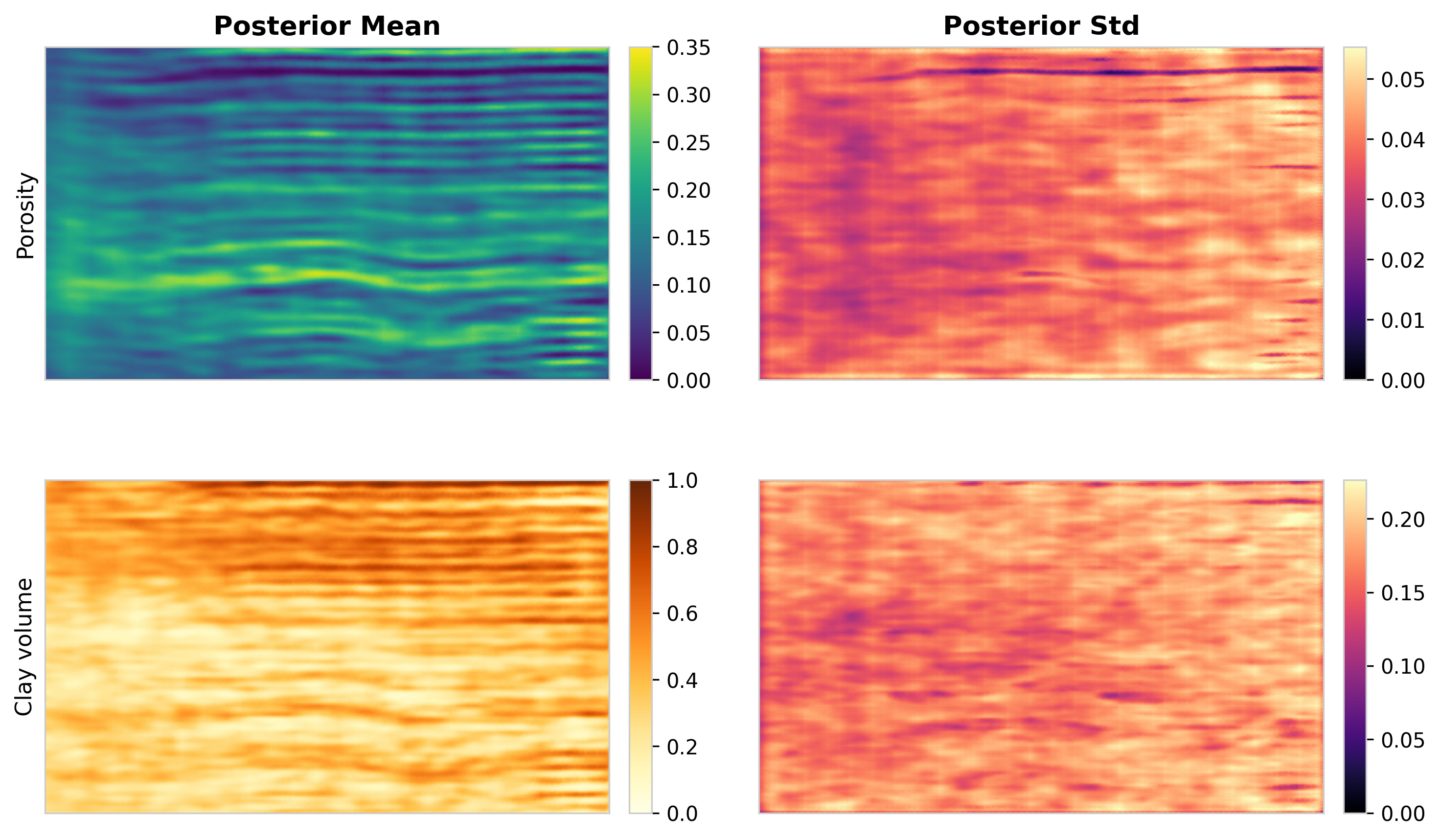
Fig. 74 Posterior statistics: mean and standard deviation.#
Convergence diagnostics track the log-posterior and data misfit over SVGD iterations, confirming that the particle ensemble has stabilized.
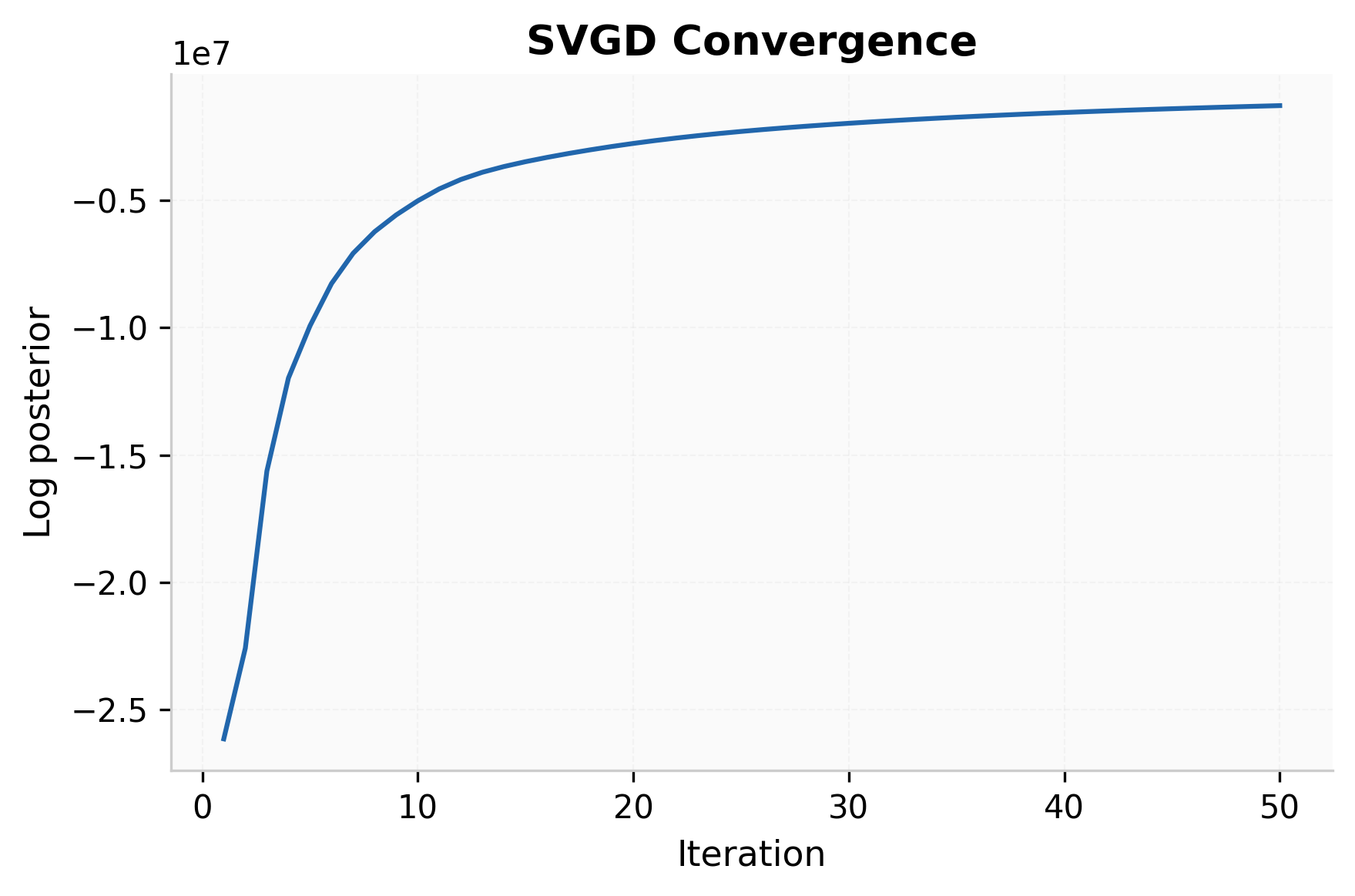
Fig. 75 SVGD convergence: log-posterior and data misfit.#