
Tutorial 12: Seismic Inversion (Deterministic)#
Note
This tutorial is available as a Python script examples/12_seismic_inversion.py and an interactive Jupyter notebook examples/notebooks/12_seismic_inversion.ipynb.
Recover elastic properties from seismic data using gradient-based inversion with three parameterization strategies: Explicit, Network (Deep Image Prior), and Latent.
What You Will Learn#
Set up a rock-physics-based seismic forward model
Run deterministic inversion with the
InverterclassCompare three parameterization strategies:
Explicit: direct optimization of porosity values
Network: Deep Image Prior using a neural network
Latent: optimization in a learned latent space
Evaluate inversion quality and convergence
Key Concepts#
Parameterization controls how the model space is represented during inversion. Explicit parameterization optimizes physical properties directly. Network parameterization uses a neural network as an implicit regularizer (Deep Image Prior). Latent parameterization maps from a low-dimensional learned space to the model domain, combining regularization with dimensionality reduction.
Each strategy offers a different trade-off between flexibility and regularization strength. The explicit approach is the most flexible but may produce noisy results without additional constraints. The network approach leverages the spectral bias of convolutional neural networks to implicitly prefer smooth solutions. The latent approach restricts the solution to the manifold learned by a pretrained autoencoder, providing the strongest geological prior but the least flexibility.
Code#
from geobrain.optim import Inverter, bound_constraint

inverter = Inverter(
    forward_fn=forward,
    initial_model=m0,
    constraints=bound_constraint(min_val=0.05, max_val=0.4),
)

result = inverter.run(
    observed_data=d_obs,
    max_epochs=500,
    lr=0.01,
    optimizer='adam',
)
Results#
The three parameterization strategies produce noticeably different porosity estimates. The explicit approach recovers fine-scale detail but exhibits noise. The network (DIP) approach yields a smoother result. The latent approach constrains the solution to geologically plausible patterns.
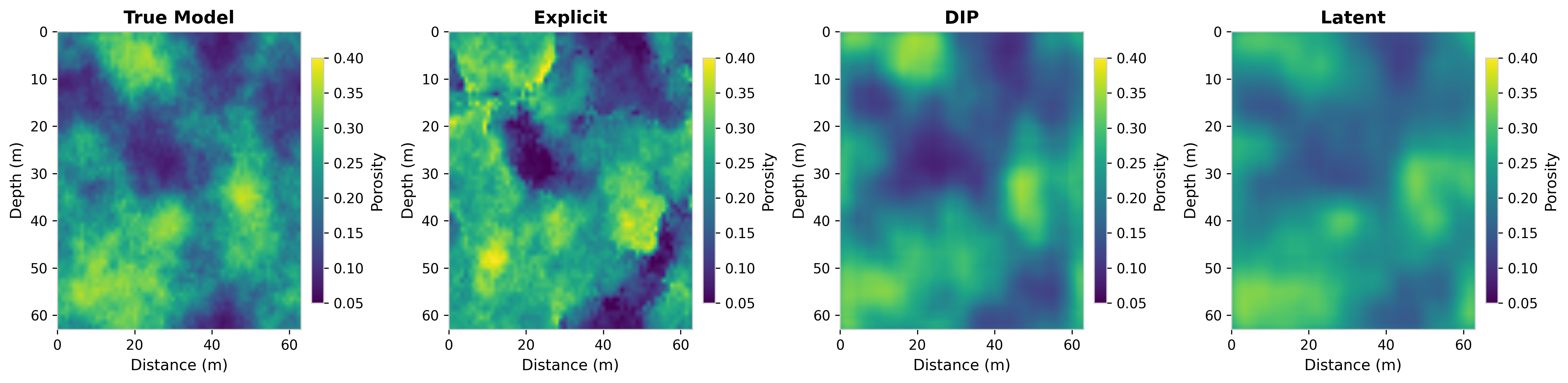
Fig. 68 Porosity inversion comparison: Explicit vs. Network (DIP) vs. Latent.#
Error maps highlight where each strategy deviates from the true model, revealing the spatial distribution of inversion artifacts.
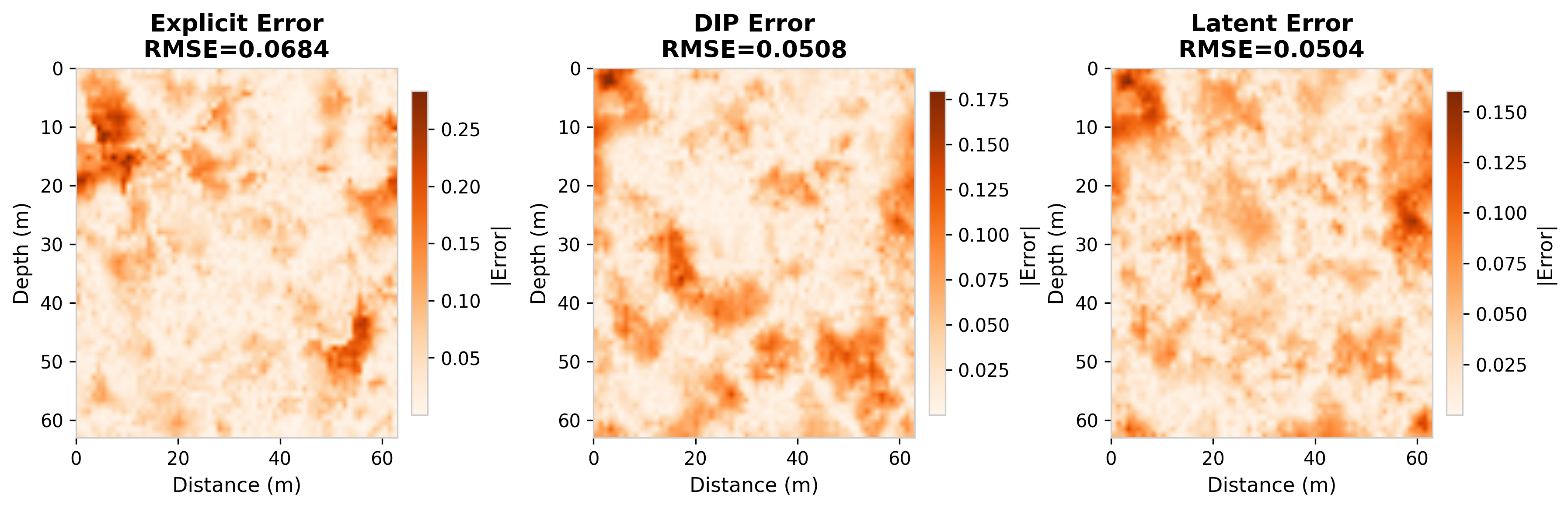
Fig. 69 Error maps for three parameterization strategies.#
Convergence curves show the objective function decrease over iterations for each approach. The latent parameterization typically converges fastest due to its reduced dimensionality.
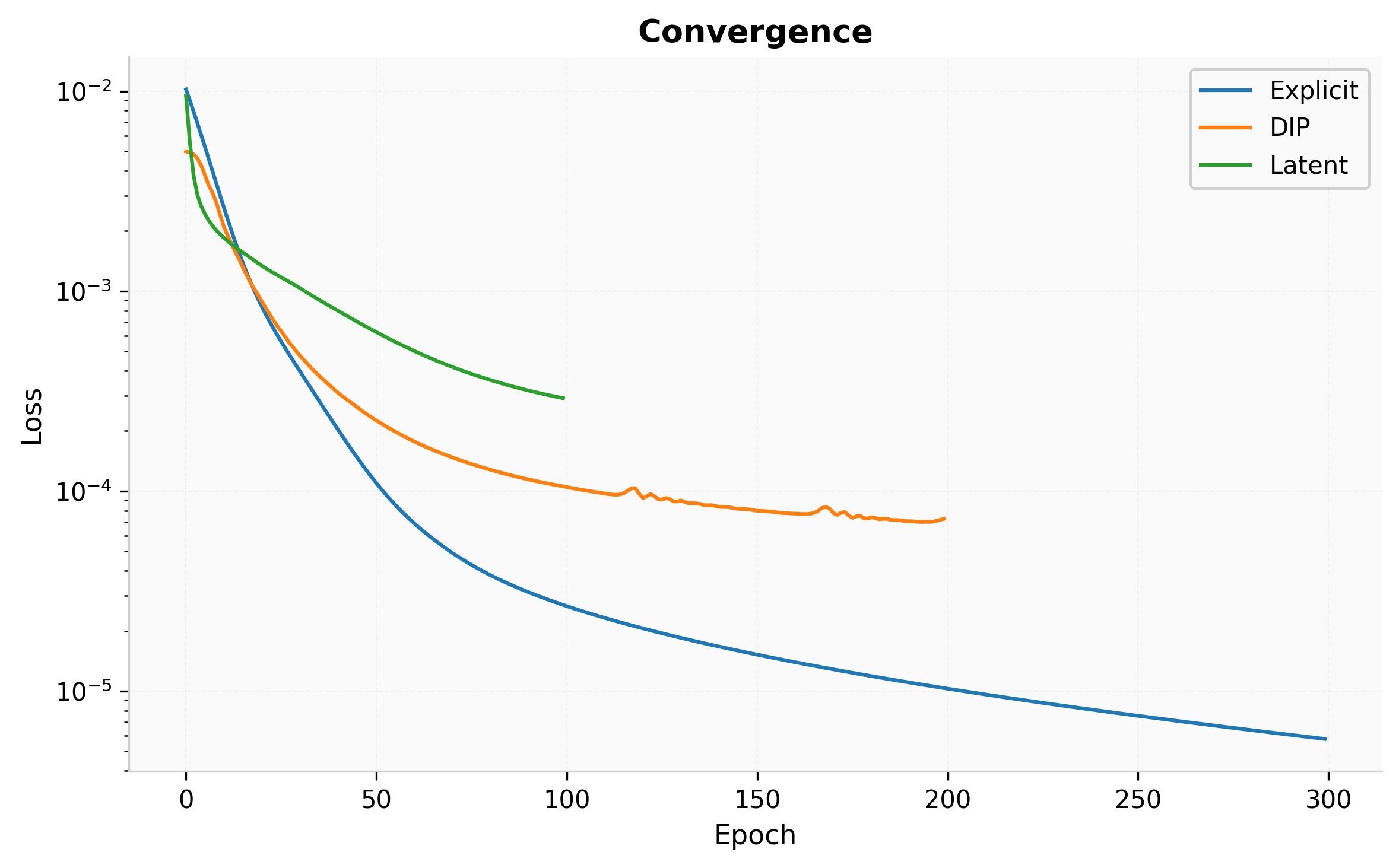
Fig. 70 Convergence curves for three inversion approaches.#